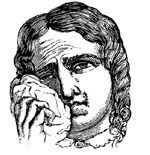
An Unwasted Life
GUEST COLUMN
When I was hired by the Office of Mental Retardation and Development Disabilities of New York State as a Habilitation Specialist, I was assigned to work in a cottage that housed thirty of the most severely impaired residents. One of the female residents under my care, Myelva (not her real name), had been institutionalized since the age of five due to severe seizures. Her records indicated she was thirty-five years old and a baptized Catholic but said little else about her history, except to report her recent behavioral activity.
Due to her seizures she developed a head-banging disorder that caused a hydrocephalic condition: Her head was quite swollen and the flesh was very soft. The seizures eventually caused her speech to become garbled to the point of being unintelligible. Her inability to communicate caused her to withdraw and become isolated from social contact with other residents and staff. She became an angry and aggressive person, causing other residents to avoid her. When she became violent, it took two or three staff members to restrain her until she calmed down.
Due to the many seizures, Myelva lost her ability to walk. When she wanted to go somewhere, she slid to the floor, rolled to where she wanted to go, and then pulled herself up. To move from room to room, she was supported by two staff or rolled in a wheelchair.
In the dining room, she refused any help to eat. Food ended up in her hair, her ears, all over her face; some eventually ended up in her mouth.


You May Also Enjoy
Reviews of The Intellectual Life: Its Spirit, Conditions, and Methods... Bonaventure: Mystical Writings... Solanus Casey: The Official Account of a Virtuous American Life
Francis & the Lutherans: Intercommunion Confusion... Giving an Appearance of Solidity to Pure Wind
This erudite exposition of Catholic dogmatics includes biblical, patristic, magisterial, ecumenical, and theological insights from the very heart of the patrimony.